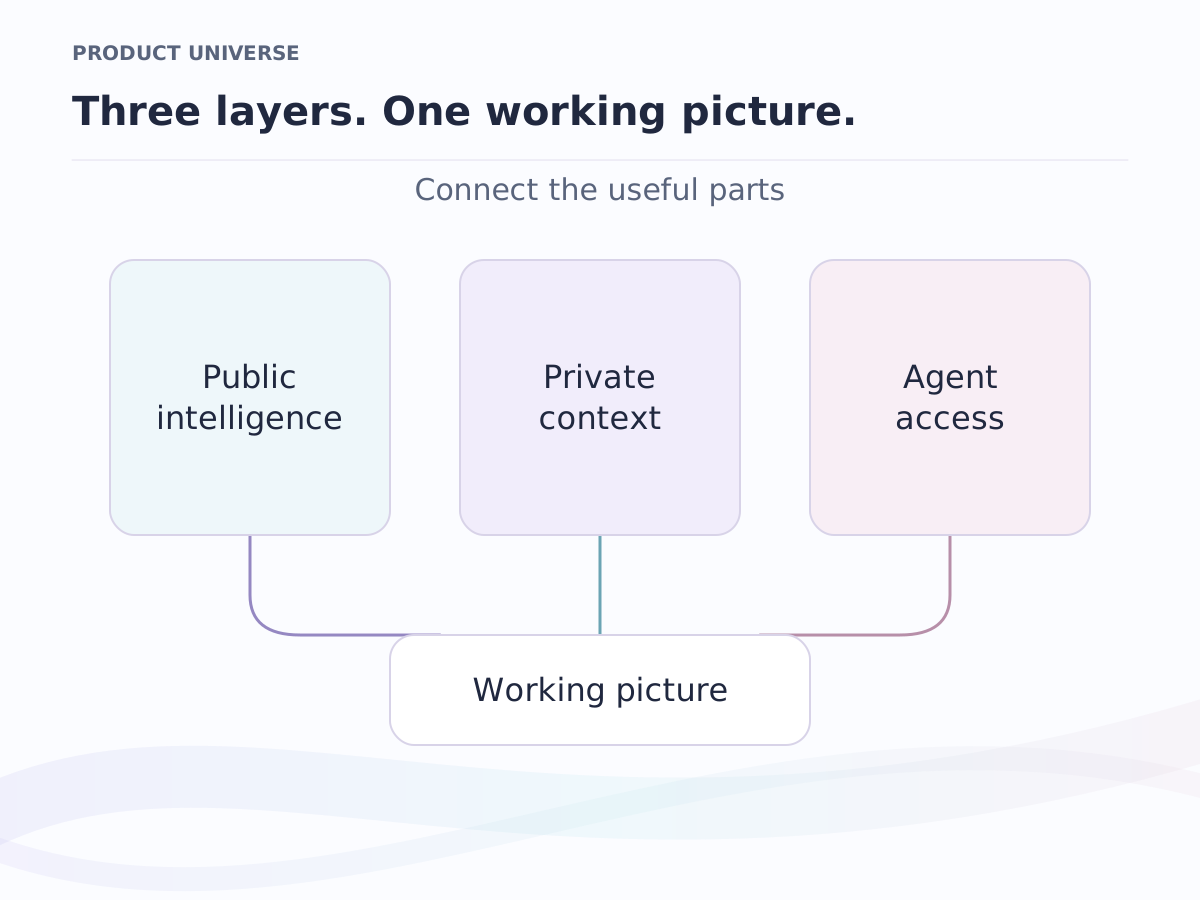

Every CRM you have ever opened started empty. The vendor hands you furniture: objects, pipelines, views. You are expected to carry the market in yourself, one copy-paste at a time. Ishara ships the other way around: the market comes preloaded, 32,822 investors and the government tenders of six markets, inside the same records that hold your deals. That sounds like a convenience feature. It is a different product shape. The why Ishara page states the thesis; this post is about what it changes day to day.
The copy-paste boundary
A standalone reference database ends at a browser tab, and the workflow it produces is familiar: find the firm in one tool, retype it into the CRM, paste a profile URL into a note, hope future-you clicks it. Every trip across that boundary costs three ways. Transcription: fields arrive with typos and go stale the moment they land. Duplication: three teammates meet the same investor and create three records with three spellings. Disconnection: when the reference record changes, your copy does not know. The boundary between the market and your book is a clipboard.
What changes when the market moves in
Adding never duplicates
In Ishara, Add to CRM is one click, and adding the same investor twice lands on the record that already exists. Anyone on the team can push a name into the funnel without checking first, and a multi-select can sweep a whole filtered directory page into a raise pipeline in one gesture, with collisions resolving instead of multiplying.
The directory shows your own state
Because the directory and your book share one set of records, records already in your workspace carry an In CRM badge as you browse, so a filtered page doubles as a coverage map: which of these fifty investors are already being worked, which are untouched. A standalone database cannot render that view. It does not know your book exists.
Warm paths run against your own records
An investor profile in Ishara ends with warm intro paths from your own workspace: colleagues connected to the investor, the peer network, records already in your book at the firm's domain, portfolio companies you already track. No reference database can copy this, because the paths are not in the corpus, they are in your CRM. The same grounding feeds the one-minute prep brief on each profile: corpus facts plus your own warm paths.
Tenders: track, do not retype
The same philosophy runs on the government side. A tender profile shows the detail in whichever language you display, the other title one click away, with its published bidder table: each bidder, CR number, bid amount and local-content ratio. When a tender belongs in your funnel, Track in CRM is one click into a bid-team pipeline, and a multi-select tray moves a filtered page of tenders at once. Nobody retypes a tender reference number at midnight before a deadline.
Built-in data you can inspect
When you typed a number yourself, you know what it is worth. When the vendor shipped it, the vendor owes you the audit trail. Three rules make the preloaded market in Ishara inspectable rather than merely present:
- Every value carries its origin. User, import, automation, formula, AI, enrichment, or system. Directory data arrives tagged as enrichment; nothing pretends a shipped fact was your own entry.
- Self-declared never mixes with confirmed. An investor's claim about their own cheque range is useful, but it is a claim, and it sits in its own column so you always know which kind of fact you are reading.
- AI you approve before it writes anything. Summaries, classifications and research land in a queue, and a person accepts them onto the record. The market may be preloaded; the judgement is not.
One set of records, not an integration
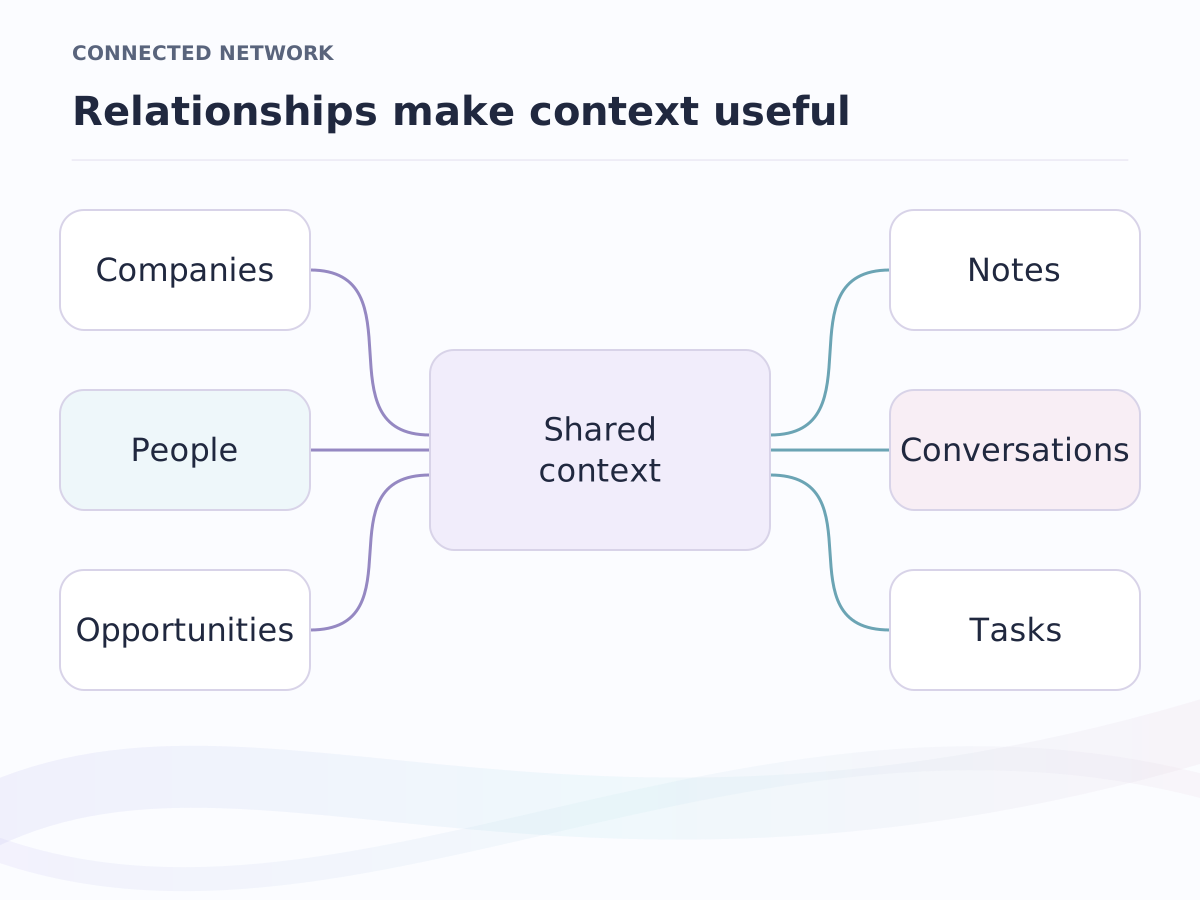
None of the above is an integration between a database product and a CRM product. One product, one sign-in, one set of records. An investor added from the directory is a record like any other: it takes the same fields, including computed formulas, shows up in saved table and kanban views you can share by link, holds its email threads, and flows through automations exactly as a record you created by hand would. In tender intelligence, every filtered view is a shareable link. The market and your book stop being two tools and become two filters on one system.
Where the rest of the context lands
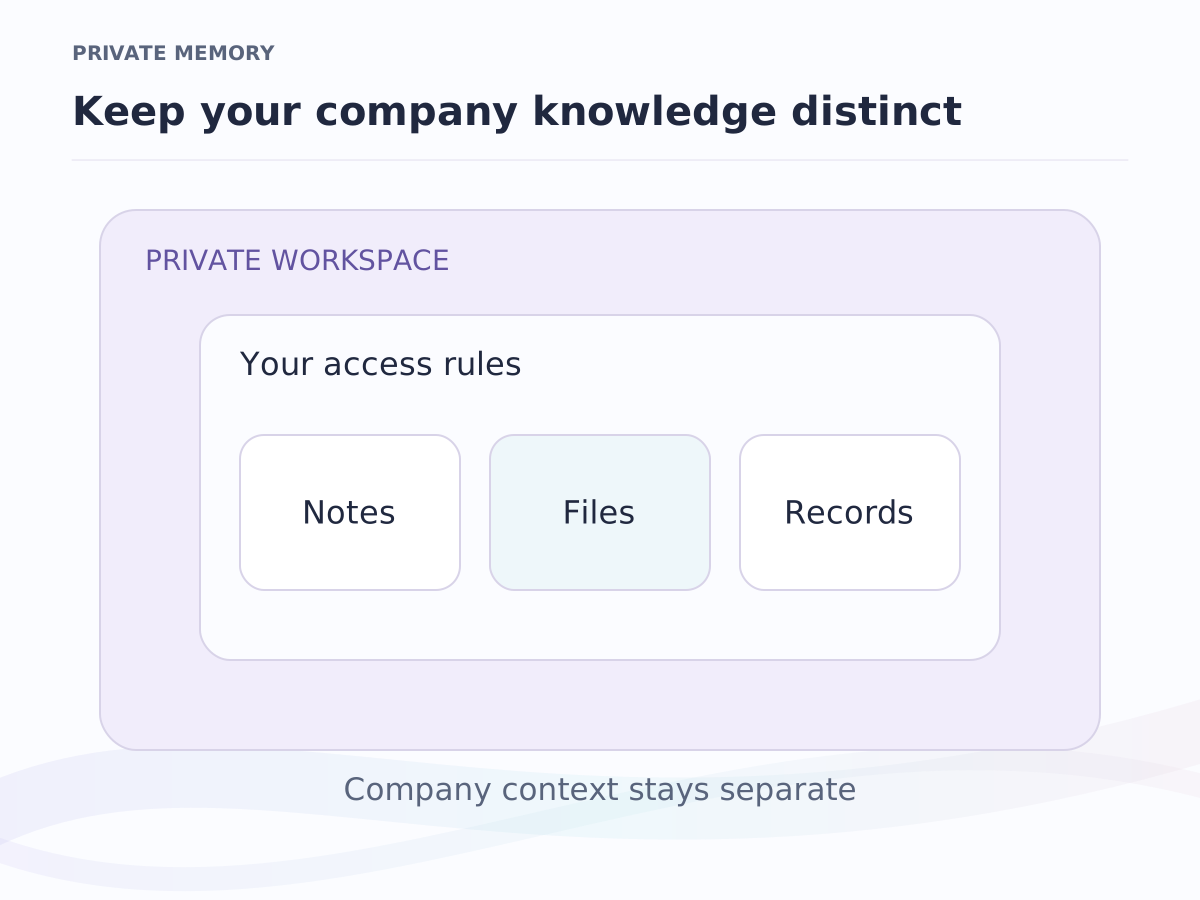
Records that already know the market are also the natural place for everything your team learns. Connect your mailboxes, meetings and calls, a WhatsApp Business account and the files you keep, and each conversation lands on the person and company it belongs to, under its own access rules. The investor record then holds the directory facts, the warm paths and what was said on last week's call, side by side and labelled by origin.
The same records are what your models and agents read. Through the API and an MCP server, an assistant prepares a brief or drafts a follow-up from that context, with its owner's permissions and nothing more, and any change it wants to make waits for a person to approve it. Your private context is supplied at the moment of a request and is never used to train models.
That is the philosophy in one sentence: your records should arrive already knowing the market, and grow with everything your team learns. The object CRM page covers the records themselves; the investor directory and tender intelligence pages show the two parts of the market that live inside them, and private context shows how your own conversations join them.