
Buy any CRM this morning and by lunch you will own a beautiful, empty database. The vendor's half of the deal ends at the box: tables, pipelines, reminders, reports. Your half is everything that makes the box worth opening. Which investors write cheques at your stage and in your market. Which government buyers purchase what you sell, on what cycle. Who won the last contract, against whom, and at what price. What your colleague promised the client on Tuesday's call.
Now add an AI assistant to the same team. It writes beautifully and knows none of it. Ask it to prepare you for Thursday's meeting and it will invent a context it was never given. For a founder raising in Riyadh or a bid team in Doha, the box was never the hard part, and neither is the model. The context is.
The empty box problem
Software vendors compete on the box because the box is what they can ship everywhere: a prettier board, a faster table, a smarter reminder, a bigger model. All of it assumes the expensive work, knowing who is on the other side of the deal and what has already been said, has happened somewhere else. In some markets it mostly has, with decades of databases and filings one import away.
In Qatar, Bahrain, Saudi Arabia, Kuwait, Oman and the UAE, the deal data exists and is often remarkably public. But nobody had made it usable, so every team paid the assembly cost privately while the industry kept selling empty boxes into the one region where an empty box costs the most.
Where the region's deal data lives
Take fundraising first. The capital in the region is hardly a secret: sovereign funds, family offices, venture firms and corporate investors, many of them announcing cheques through Arabic press, panels and conference stages rather than the databases everyone else queries. Reaching them starts with a directory that treats Arabic and English names as one identity and knows which cheque sizes fit which rounds.
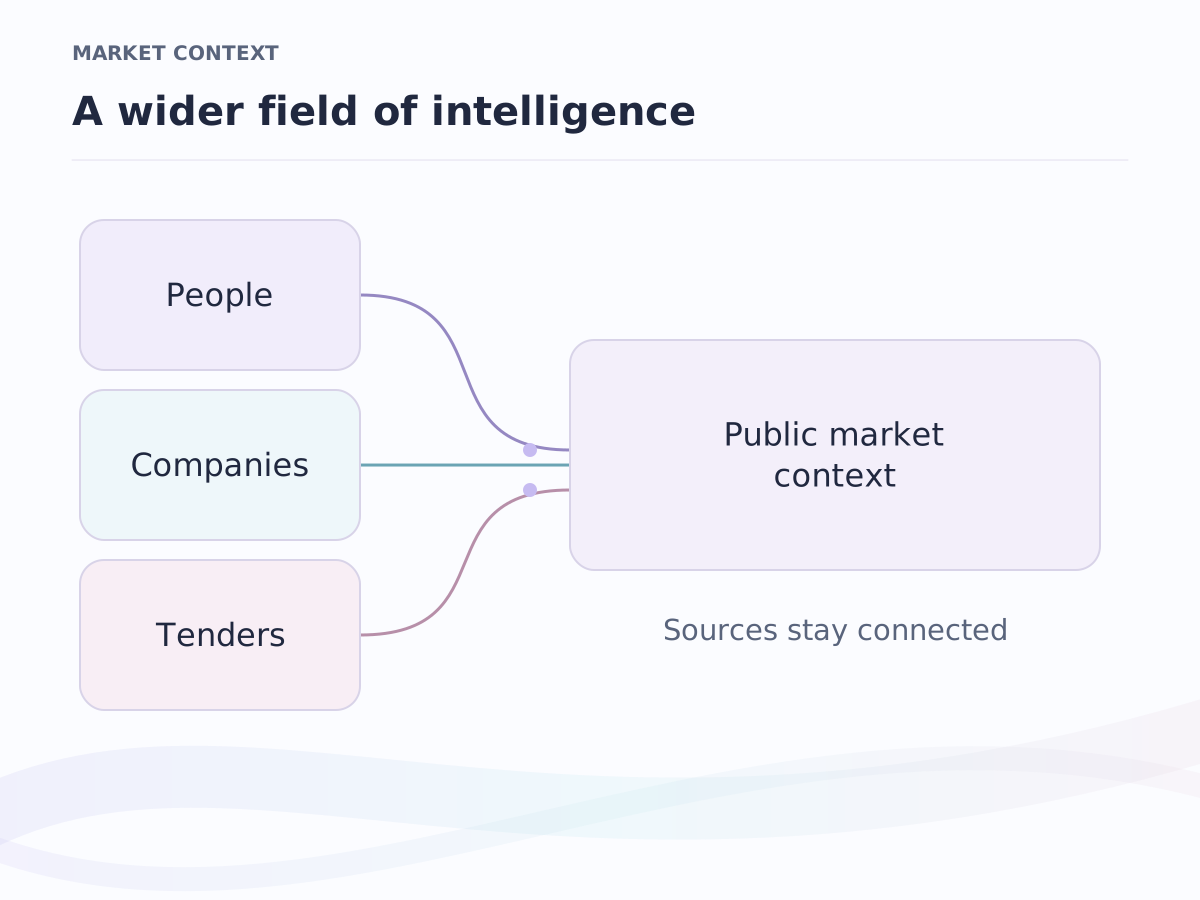
Now take government demand. The same six states publish tenders and awards, and the best of those records carry the bidder table: the companies that bid and what each one offered. That is among the most valuable competitive documents a market can produce, and it lives in Arabic-first systems scattered across states and entities. Public in principle, hard to use in practice. 





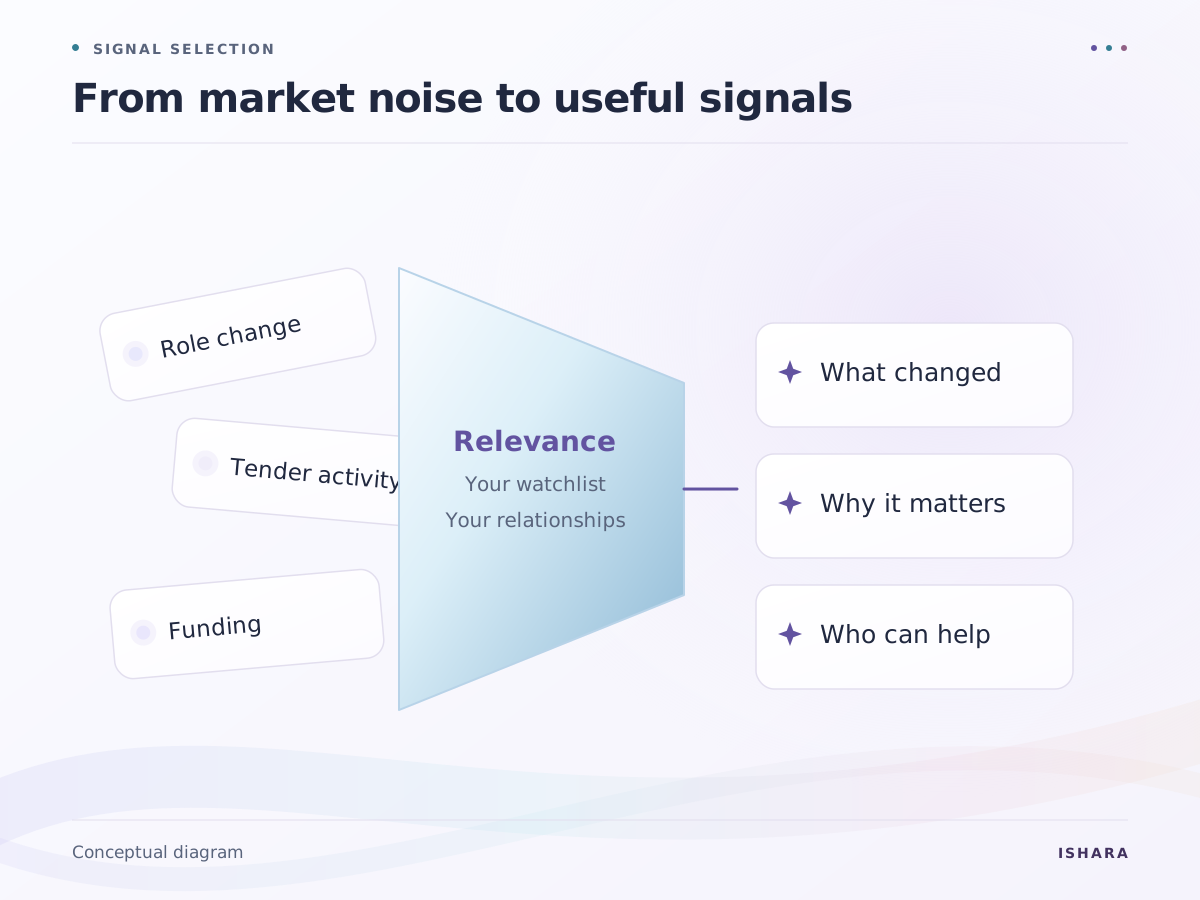
So we built the public half first: government tenders across six markets with their buyers, suppliers and bid tables; 32,822 investors with their cheque sizes, sectors and past rounds; 17M companies covered; and the signals that say when something changed. Any row becomes a record in one click.
The market is only half the picture
Building the public half taught us the rest. Knowing that a ministry is re-tendering its facilities contract is useful. Knowing that your colleague met its operations director last month, that the follow-up is still open, and that the incumbent's price was 7% under the median is what wins. That second half lives in your own systems: the mailboxes, the meetings and calls, the WhatsApp Business conversations, the files and the CRM records.
Ishara connects them and resolves them into people, companies, decisions and next steps on the right record, under each conversation's own access rules. A call becomes a summary and proposed next steps, each with the sentence it came from. Your private knowledge stays separate from the public intelligence, and visible only to the people it was shared with.
Context your AI can actually use
Once the market and your team's knowledge sit in one layer, the models and agents your team already uses can draw on it. Ishara gives them permissioned context through an API and an MCP server: a key acts as its owner, with that person's access and nothing more. When an agent wants to change something, it proposes; a person approves.
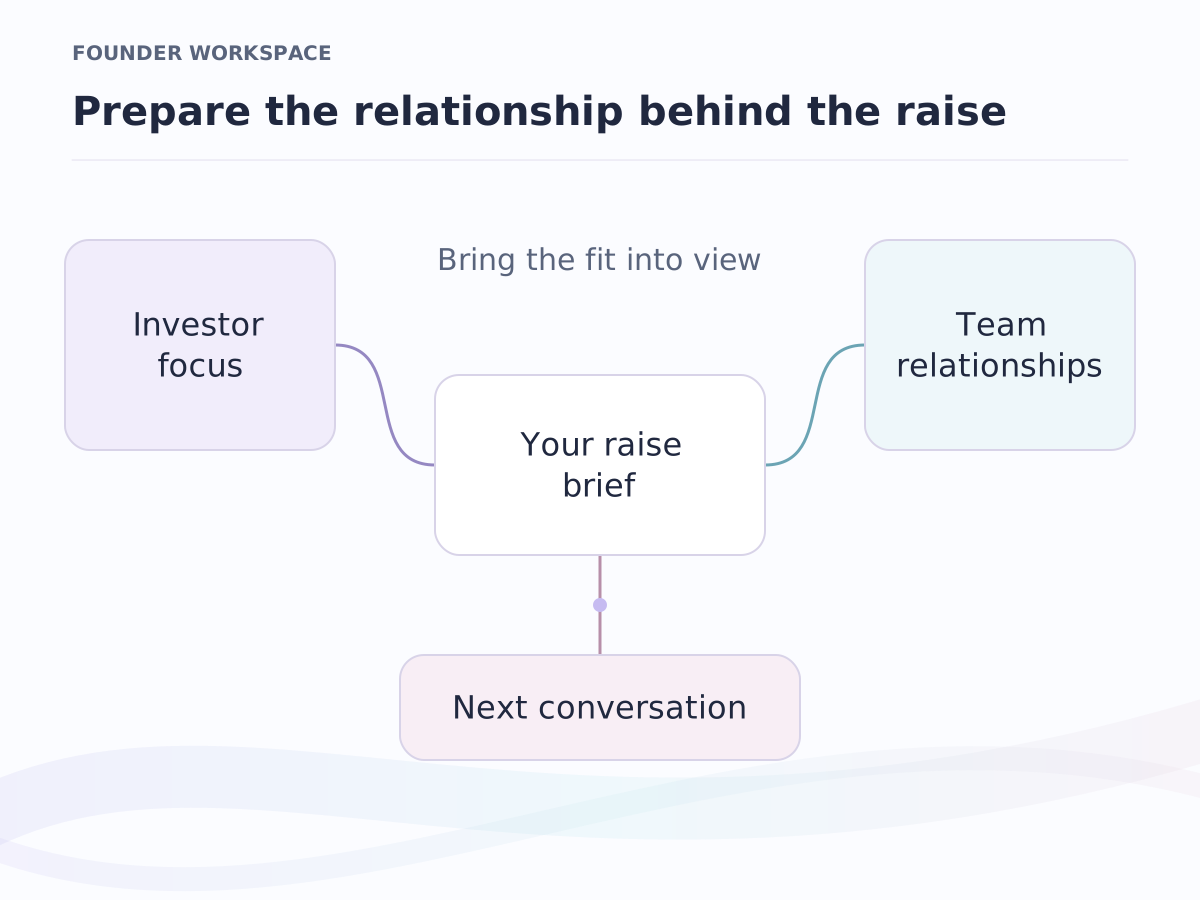
Your private context is supplied at the moment of a request and is never used to train models. Ask your assistant to prepare you for Thursday's meeting, and the brief it writes now starts from who you are meeting, what was said last time and what changed in their market since.
A knowledge layer, not a bigger database
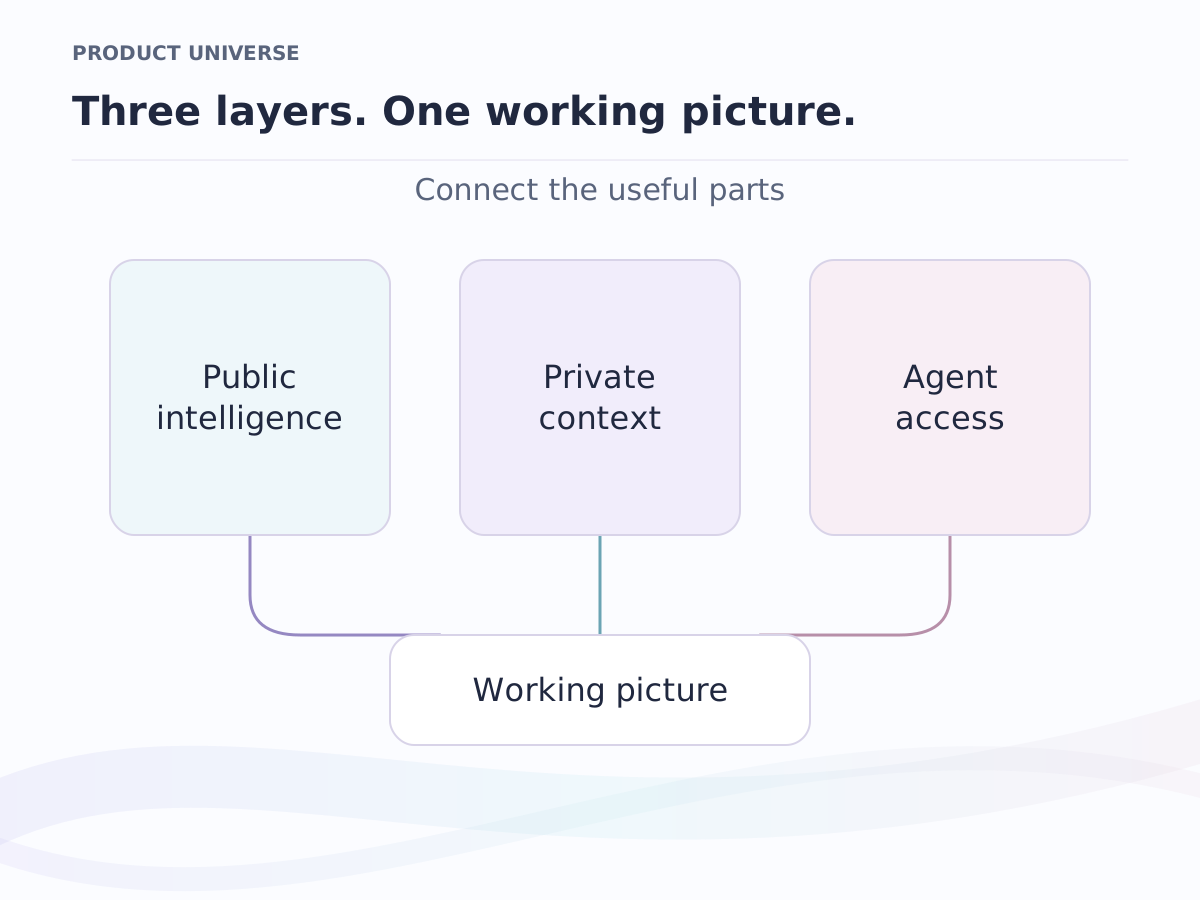
Put together, that is what Ishara is: the enterprise knowledge layer for people, models and agents. Public intelligence on the market. Private enterprise context from your own work. Agent access for the AI that acts on both. The applications teams see every day, from investor matching to tender intelligence and call intelligence, are views onto that one layer.
A layer like this has to earn trust, so the rules are structural. Every stored value carries its origin. Self-declared claims never share a column with confirmed facts. And AI writes nothing to a record until a person accepts it. The follow-up post on what bidder tables teach shows what the public half makes possible on its own.
Why we called it Ishara
Ishara is the Arabic word for signal. It is also the everyday word for a gesture: the flick of a hand that says go ahead, or over there. We liked both readings, and the why Ishara page carries the longer version.
The region's deal market is not short of information. Tenders publish, press releases circulate, inboxes fill, transcripts pile up. It is short of signal: the part that tells you where to look and what it means. Ishara points: at the investor whose cheque size contains your round, at the tender whose bidder table says the category is winnable, at the promise from last week's call that nobody has kept yet. You decide, and your agents propose. That is the knowledge layer.