

Signals
Know when a contact moves or a rival wins,
and who to tell.
Job changes, promotions and moves on the people you know. Tender wins, recompete windows, raises and listings on the companies you track. One feed, with the warm path beside every signal and automations that act the moment one appears.
A work email reserves 5,000 credits ($50).
Early access in waves · English and Arabic · Six markets, one feed
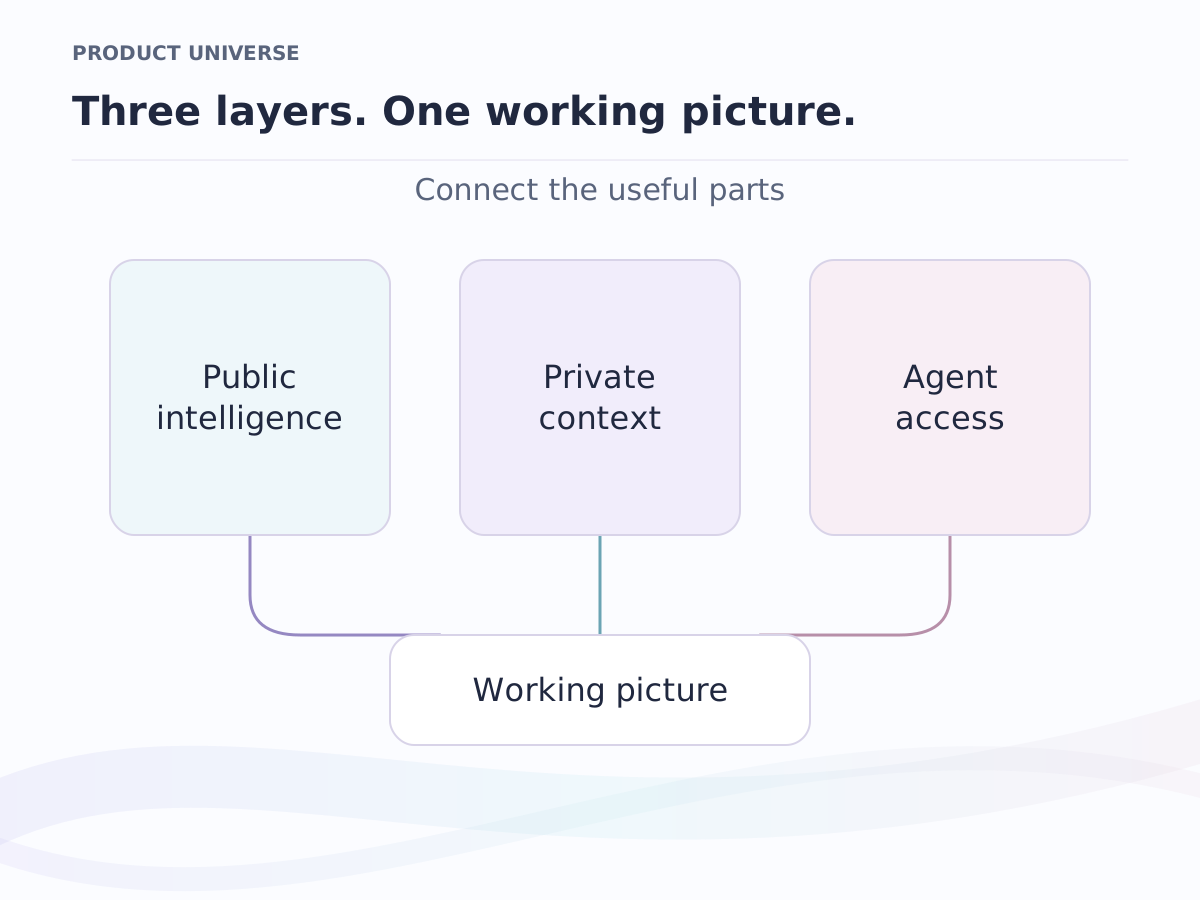
Where it sits. Signals are where the two layers meet: market intelligence says what changed, and your private context says who in your team knows them and what was said last.
People
When a contact moves, you hear it first
A job change, a promotion or a move to a new company appears as a signal on the person's timeline and on Today, with the strength of the relationship and the people in your team who know them beside it. The follow-up is one click away.
- Job change
- the new title and company on the record, with the old ones kept
- Promotion
- a champion who moved up, surfaced the day it shows
- Relationship strength
- a strength per record and per teammate, from none to strong, that you can sort by and correct
- Warm paths
- who knows them, and an introduction request drafted for you to review
Companies
The market moves. Your records say so.
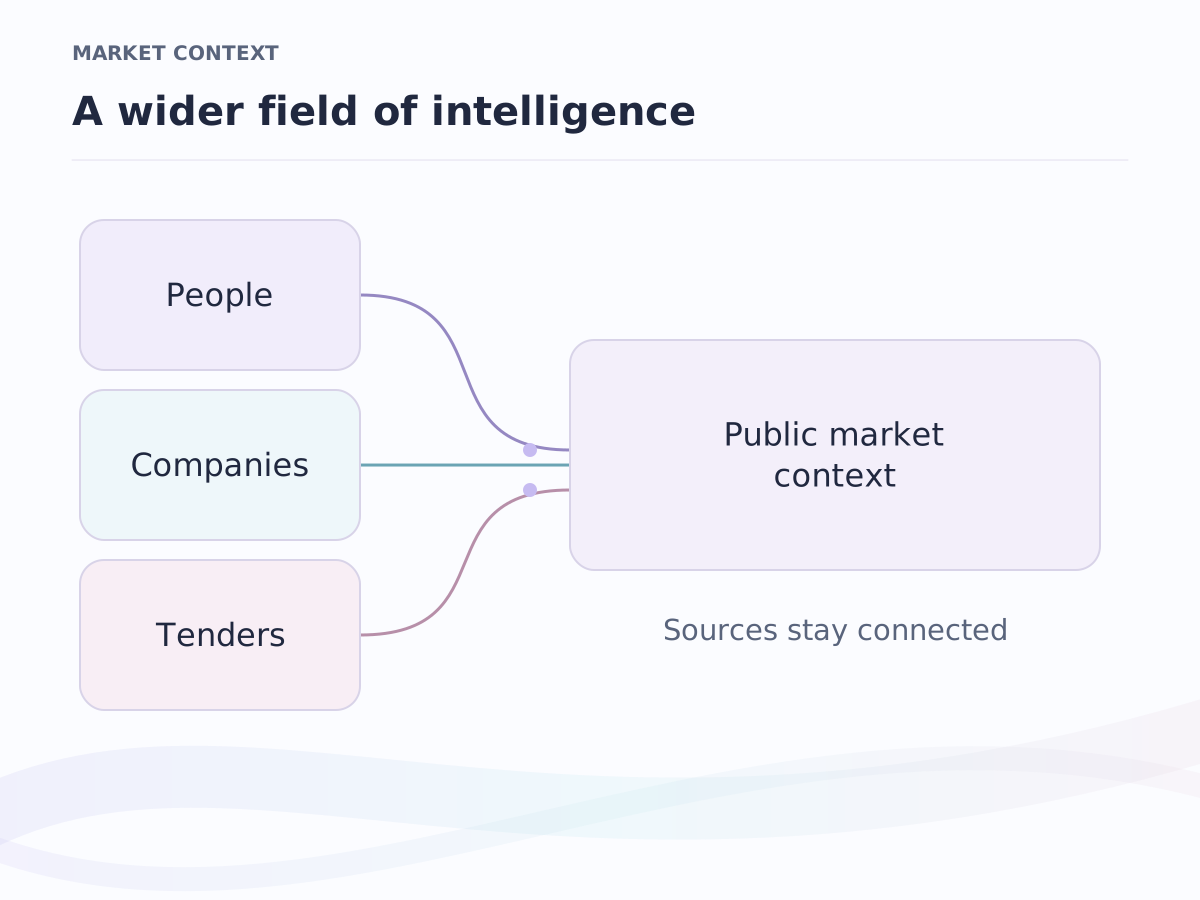
Company signals come from the market already inside Ishara, so a company in your CRM tells you what it did in public before anyone in the room does.
Tenders
A company you track won, lost or bid on a tender, or holds a contract whose recompete window just opened.
Capital
A raise closed, a new investor came in, or the company listed. On an investor, a fresh deal in your sector.
Buyers
A buyer you watch awarded to someone else, so the conversation about the next one starts now.
Tender alerts
A matching tender arrives as a notification
Set what you bid on and Ishara tells you when a matching tender is published or a watched buyer moves. A digest in Arabic and English arrives on local working days, so the week opens already read, across Qatar, Bahrain, Saudi Arabia, Kuwait, Oman and the UAE 




 .
Inside tender intelligence, and the recompete radar for the contracts coming back.
Act on it
One feed, and rules that answer it
Every signal sits in one feed in your Inbox and on a card on Home. Select a few and start outreach from the selection, or let an automation take the first step.
Read
The feed, newest first, with the record and who knows them one click away.
Select
Pick the signals that matter and start an email or a task from the selection.
Automate
A rule fires on a signal, on a relationship that is cooling, or on a follow-up that came due.
Going quiet and Cooling are ready as saved views in the object CRM; rules with a test mode are on automations.
Explore the context
An answer is better
with its sources.
Choose a source to see how a market fact, a conversation and a record can inform the next move.
Illustrative walkthrough. All records and source excerpts below are fictional.
Explore enterprise contextOutside your organisation
An account is opening a new chapter.
The example account has announced a regional expansion and a new operations role.
“Our next phase brings operations closer to customers across the region.”
Bring the new operating priorities into your account research before the next conversation.
Public-source context
Inside your organisation
The promise is still in the conversation.
The example customer asked for a pilot outline and named security review as the next checkpoint.
“Let us review the pilot outline and the security requirements together.”
Prepare the outline with the security requirements attached, then ask the owner to review it.
Visible to the authorised account team
Inside your organisation
A relationship gives the fact a home.
The example account owner is already working with the operations team. The opportunity is in qualification.
Account owner: relationship team. Opportunity stage: qualification.
Keep the proposed follow-up on the existing account, with its owner and current stage.
Existing record permissions apply
Inside your organisation
The next step has a file beside it.
The example pilot brief calls for a two-week evaluation and a shared success checklist.
“Evaluation: two weeks. Success criteria: agreed jointly before the pilot.”
Carry the agreed evaluation criteria into the follow-up instead of starting from a blank page.
Available to authorised document readers
Frequently asked questions
What counts as a signal?
On a person: a job change, a promotion or a move to a new company. On a company: a tender won, lost or bid, a recompete window opening on a contract it holds, a raise, a new investor, a listing, or a buyer you watch awarding elsewhere. Each one appears on the record's timeline and in the feed.
Where do company signals come from?
From the market already inside Ishara: government tenders across Qatar, Bahrain, Saudi Arabia, Kuwait, Oman and the UAE, and the investor and funding directories. A signal names the record it came from, so you can open it.
Can an automation act on a signal?
Yes. A rule can fire on a signal, on a relationship that is cooling, or on a follow-up that came due, run in test mode first, and take any step an automation can take: a task, an email, a field, a webhook.
How do tender alerts reach me?
As a notification when a matching tender is published or a watched buyer moves, and as a digest in Arabic and English on local working days. Tender intelligence comes with the Business plan, $39 per seat per month.
How do I start?
Ishara opens in waves. Join the waiting list with a work email and 5,000 credits ($50) are reserved for you. Your invite opens a workspace with the market already inside.
Keep exploring
Where to go next.
Market intelligence
People, companies, investors and government tenders, already researched.
Track buyers and competitors
Follow the buyers you sell to and the firms you bid against.
For bid teams
Find, qualify and price government work across six markets.
Early-access pricing
Free, Pro and Business per seat. Enterprise is scoped with the team.
Hear it first, with the context beside it.
Join the waiting list: every job change, tender and raise that touches your records arrives in one feed, with the warm path beside it. A work email reserves 5,000 credits ($50).
Early access in waves · A work email reserves 5,000 credits ($50) · Arabic and English